I began with exploratory research, leveraging an informal Instagram poll of 45 followers to validate the need for a burnout diagnostic. These insights informed the user flow and high-fidelity wireframes I prototyped in Figma. To move from design to a live product, I pivoted into a Design Technologist role, building a custom AI-orchestration pipeline. I used PromptCowboy to translate UX logic into development prompts, ChatGPT as a technical tutor to engineer custom CSS for glassmorphism and animations, and Databutton to deploy the full-stack web application. This AI-augmented workflow allowed me to bypass traditional development limitations and ship a high-fidelity, interactive product autonomously.
Stage 1 wireframe made in Figma

The first high-fidelity prototype of the landing pages, prior to feedback.

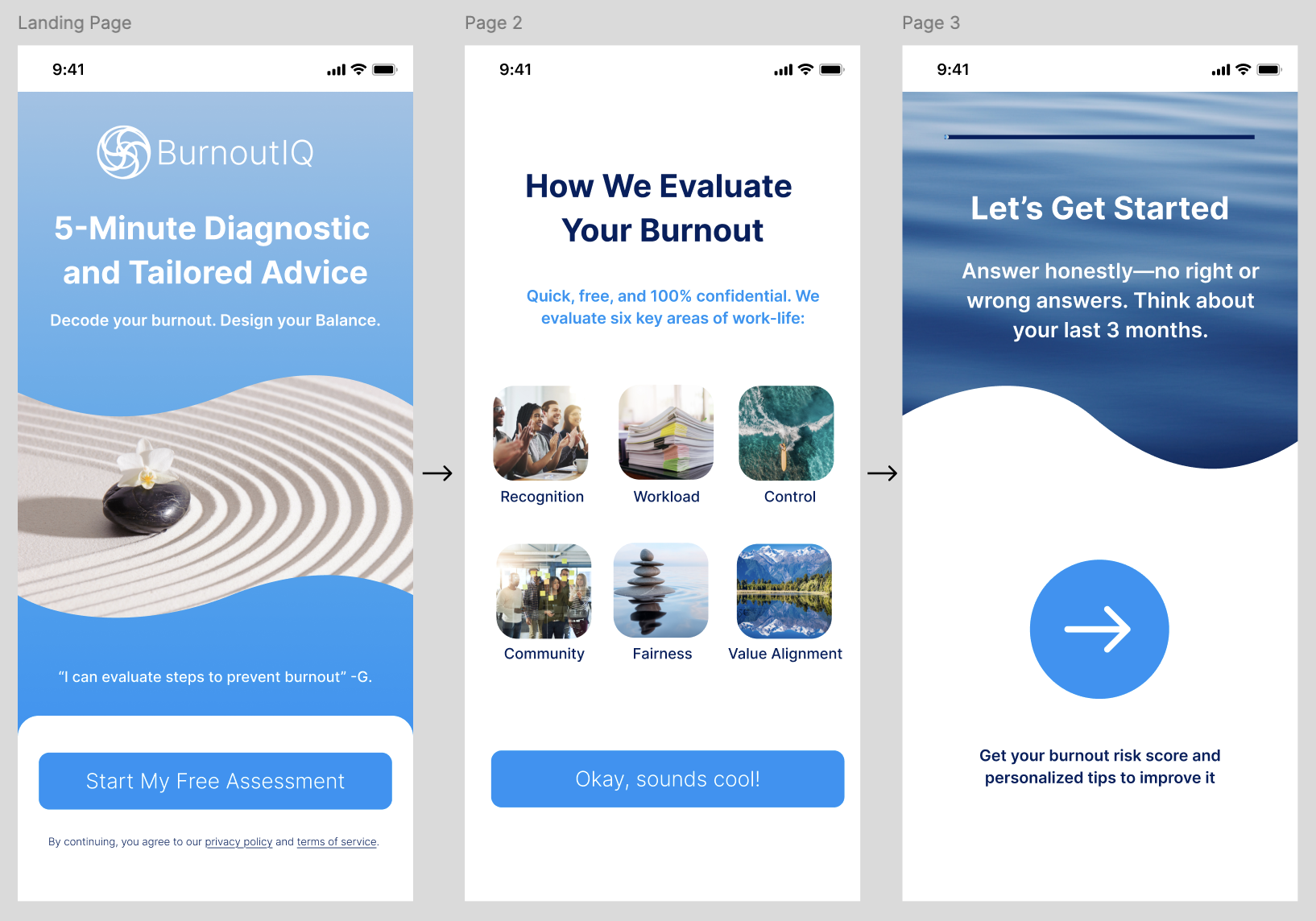
Final design: mobile-first, spacious, intuitive, and to-the-point.
- Lack of funding for structured User Research: Leveraged social media polls, informal testing, and stakeholder input to gather quick, actionable feedback.
- Technical limitations of Databutton: Used PromptCowboy and ChatGPT to translate design concepts into workable code, stretching what was possible on the platform.
- No established UX/design infrastructure at a small business: Took initiative, worked collaboratively across teams, and adapted to constraints with positivity and persistence.
BurnoutIQ became one of Five to Flow’s most successful launches ever, with 106 users completing the diagnostic in just over a month. Feedback highlighted both the usability and the impact of the tool:
“I thoroughly enjoyed this diagnostic tool as the questions were unique and probing… Very insightful and will be a great tool in the workplace.” — Andrew Byerly, user feedback survey
“I got some awesome feedback about how cool the UI, Brand/Design, and ease of use was with BurnoutIQ today… it is an inspiration to another organization.” — Five to Flow’s CEO
The tool was praised for its clarity, engaging design, and accessibility. Human-centered design is paramount even under constraint.
Before
After

Reflection
BurnoutIQ reinforced the value of designing a complete product experience from start to finish. In addition to the diagnostic itself, I named the product, wrote the landing page copy, and designed the supporting pages so the experience felt cohesive and intentional. Working within limited resources pushed our small team to rely on curiosity, quick learning, and close collaboration to move the product from idea to launch. The project strengthened my ability to design under constraint, balance clarity with empathy, and use thoughtful details to build trust with users.


.png)